> For the complete documentation index, see [llms.txt](https://help.trybeans.com/llms.txt). Markdown versions of documentation pages are available by appending `.md` to page URLs; this page is available as [Markdown](https://help.trybeans.com/members/deactivate-account.md).
# Deactivating a member
How to remove a customer from your rewards program
Deactivating a member means denying a customer access to your rewards or referral program. A customer can be deactivated either manually or automatically based on their activity.
When a customer is deactivated, they won’t be able to receive emails, earn points, spend points, refer their friends, or access their earned rewards. No data is deleted and you can reactivate the customer's account later if needed.
### Steps
#### **Deactivate a member manually**
1. From the **Beans dashboard**, go to the **Members** page.
2. Locate the member you would like to deactivate and click to open their profile details.
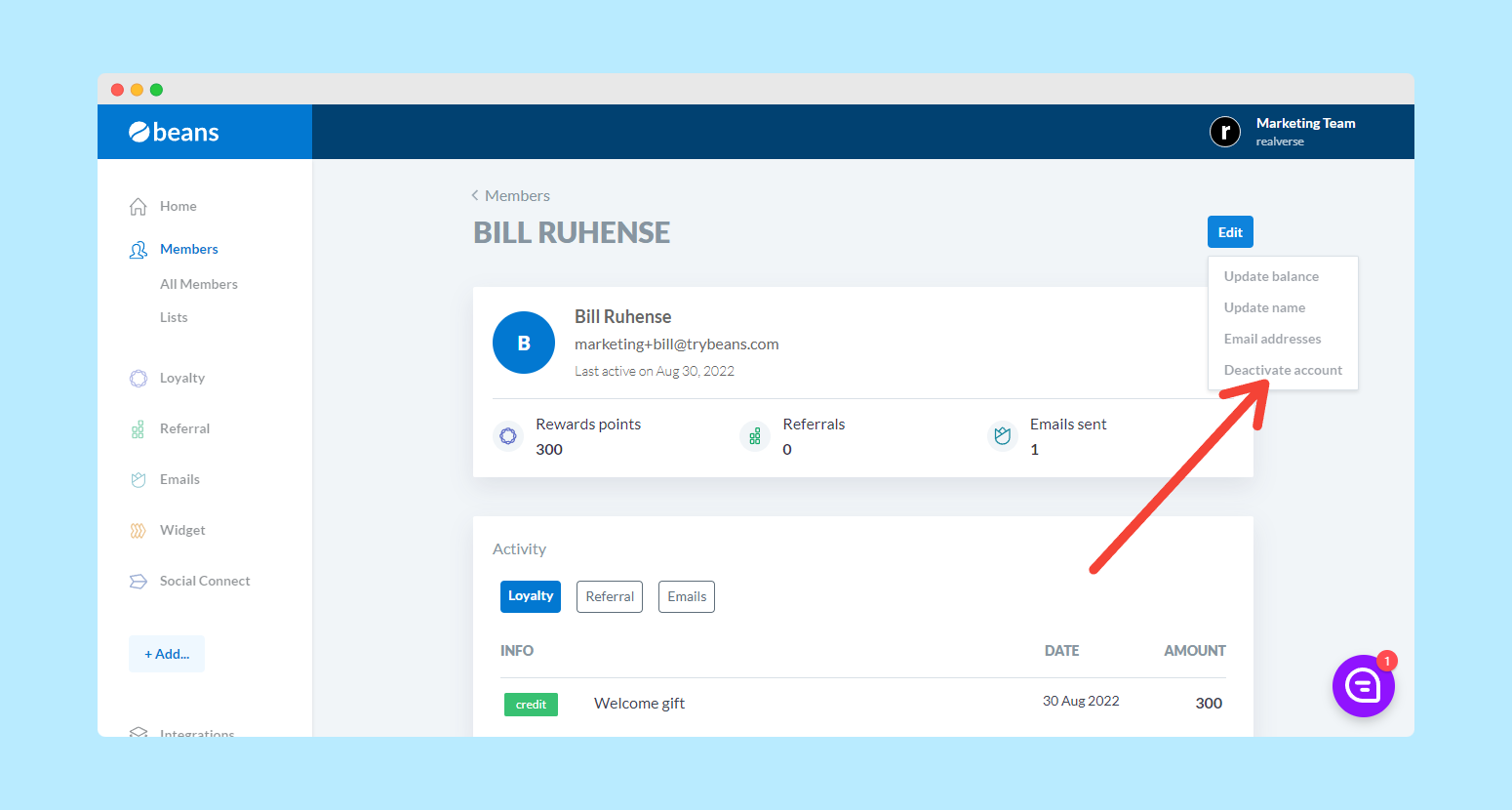
3. On the **Member details** page, click on the **Edit** button, then click on **Deactivate account**. A confirmation message will appear and ask you to confirm. Click on **Deactivate** to confirm the deactivation
Deactivate a member's account
#### **Reactivate a member**
1. From the **Beans dashboard**, go to the **Members** page.
2. Locate the member you want to reactivate and click on them to open their profile details.
3. On the **Member details** page, click on the **Reactivate** button.
Reactivate a member's account
### Automatic deactivation
An account gets automatically deactivated when the customer opts out of the program, or if the delivery of email notifications returns a bad status such as spam reports. If you think an automatic deactivation was an error you can reactivate the account.